The checklist below applies to Los Angeles-area remodels, ADUs, additions and larger residential work. It is homeowner education, not legal advice; confirm current contract and license requirements directly with the California Contractors State License Board.
Contractor screening checklist
Before signing, a homeowner should be able to answer yes to each of these questions:
- Does the CSLB record match the business named on the proposal, show an active license and list an appropriate classification?
- Did I receive current insurance information in writing?
- Am I comparing at least three written bids based on the same plans and work?
- Does the contract explain inclusions, exclusions, permits, payments and changes?
- Do I know who will supervise the site and how updates will be handled?
1. What should you verify before hiring a contractor?
Check the license record, not just the license number
A license number printed on a website, vehicle or proposal is a starting point. Use the CSLB’s official Check a License tool to confirm that the license is active, belongs to the person or business presenting the proposal, and covers the type of work being discussed. The CSLB record can also show classifications, bond information, workers’ compensation information and complaint disclosures when they are publicly reportable.
Compare the CSLB name and address of record with the proposal, contract and contact information you received. If the names differ, ask for a clear explanation before proceeding. A license belonging to another business is not proof that the person presenting the bid is authorized to contract under it.
When someone visits the property to prepare or negotiate an estimate, confirm who that person represents. CSLB advises homeowners to compare the individual’s identification with the license or, when applicable, a registered Home Improvement Salesperson record. When registration is required, the salesperson’s record should connect that person to the licensed contractor represented.
Ask for insurance information in writing
Ask how workers’ compensation and commercial general liability coverage apply to the project. According to CSLB, California employers generally must carry workers’ compensation insurance for employees. General liability insurance is different and is not universally required, but it can address certain property-damage risks.
CSLB recommends asking for a certificate of insurance or the carrier and agency information so coverage can be verified. Check the named insured, policy dates and the type of coverage instead of treating a verbal “we’re insured” as documentation. A homeowner may also want to ask their own insurance carrier how the proposed construction affects existing coverage.
Understand what a contractor license bond does—and does not do
California licensed contractors are generally required to maintain a contractor license bond, and bond information appears in the CSLB record. A license bond is not the same as commercial general liability insurance, a project performance bond or a warranty. Ask questions when a proposal uses the word “bonded” without explaining which bond is being referenced.
Confirm the contractor is a fit for this scope
A contractor may be licensed and still be a poor fit for a particular project. Ask about recent work with a similar structure, level of finish, occupied-home condition, access limitation and permit path. References are most useful when the projects resemble yours in scope, not simply when they produced attractive photographs.
2. How should you compare contractor estimates?
CSLB recommends obtaining at least three written bids. They should be compared against the same plans, specifications and scope. That last part matters: three totals cannot be compared fairly if one includes demolition, engineering and finish materials while another leaves those items as allowances or exclusions.
Give every bidder the same drawings, finish expectations, owner-supplied items and permit assumptions. In the comparison table, record what each price includes and what remains undecided. An allowance should identify the category, dollar amount and adjustment method—not simply say “tile allowance” or “fixtures TBD.”
| Compare | What to look for | Why it matters |
|---|---|---|
| Scope | Included work, quantities, standards and exclusions | Prevents unlike proposals from appearing equivalent |
| Allowances | Category, amount, material or installed basis, and adjustment method | Reveals costs that remain undecided |
| Permits | Who prepares documents, pays fees and coordinates inspections | Clarifies responsibility before work begins |
| Payments | Milestones tied to completed work or delivered materials | Shows how cash flow follows progress |
| Changes | Written approval, price detail and schedule effect | Controls work outside the original agreement |
| Closeout | Final inspections, punch list, cleanup, warranties and documents | Defines what completion actually means |
Ask each bidder to explain meaningful differences. A higher number may include engineering, demolition or finish work missing from another proposal. CSLB cautions homeowners about bids that are substantially lower than comparable bids; the lowest initial total is not the best deal when required work has been omitted.

3. What should the written contract explain?
California home-improvement contracts are regulated. CSLB currently states that home-improvement projects over $500 in combined labor and materials require a written contract. Changes to the scope or price should be documented in written change orders and signed before the changed work proceeds. Review the current CSLB guidance for requirements, exceptions and cancellation rights before signing.
At a practical level, the agreement should make the following understandable:
- The contractor’s legal identity, address and license number
- The work included, materials or performance standards, and exclusions
- Who is responsible for permits and inspections
- Approximate start and completion information and allowable delays
- A payment schedule connected to work or project phases
- How owner-requested or unforeseen changes are priced and approved
- Cleanup, protection and final completion responsibilities
- Any offered labor or material warranty, in writing
Do not rely on a verbal promise to fill a gap in the contract later. If an item affects price, quality, schedule or responsibility, ask that it be written clearly before signing.
4. How should payments and lien releases be handled?
Payment terms should be understandable before construction begins. CSLB states that, under the general home-improvement rule, a down payment cannot exceed $1,000 or 10 percent of the contract price, whichever is less. CSLB also notes a rare exception for contractors with a qualifying blanket performance and payment bond on file. Verify the current rule and any claimed exception directly with CSLB.
The remaining schedule should connect dollars to described work or delivered materials. Except for the permitted down payment, CSLB guidance says requested payments should not exceed the value of work performed or materials delivered. Avoid vague milestones such as “progress payment” without a defined result.
Homeowners should also understand mechanics-lien notices and releases. Paying the general contractor does not by itself prove that every subcontractor, supplier or worker has been paid. CSLB publishes conditional and unconditional waiver and release forms and explains when each is used. For a substantial project, discuss the payment and release procedure before the first progress payment, and seek qualified legal advice when a notice or lien question is unclear.
Keep a project record containing the signed contract, drawings and specifications, change orders, invoices, proof of payment, notices, lien releases, permit documents, inspection records, warranties and important written communications. Organized records make questions easier to resolve during construction and closeout.
5. How should you check contractor references?
Ask for references that help evaluate both the finished work and the process. A completed project can reveal how closeout and warranty questions were handled. A current or recent project can provide insight into communication, supervision and site organization. Where practical, prioritize projects similar to yours in scope, age of structure, access and finish expectations.
Useful reference questions include:
- Was the initial scope clear, and were exclusions explained?
- Who supervised the site and how consistently were updates provided?
- How were selections, surprises and change orders documented?
- Did payment requests correspond to recognizable progress?
- How were occupied areas, neighbors and the property protected?
- Were inspections, punch-list work and final documents completed?
- Would the homeowner hire the contractor again for a similar project?
References are one input, not a substitute for licensing, insurance and contract review. Contractors naturally select customers willing to speak, so listen for specific examples rather than relying only on a general statement that everything went well.
6. What questions should you ask a general contractor?
- Who will supervise the work day to day? Know who has authority to answer questions and coordinate trades.
- How often will I receive updates? Agree on the usual communication channel and what triggers an immediate call.
- Which decisions do you need from me before construction? Late finish selections can affect ordering and scheduling.
- Who handles permits and inspections? The written agreement should assign responsibility.
- Which work will be self-performed or subcontracted? Understand how specialty trades are selected and coordinated.
- How are concealed conditions handled? Older homes can contain conditions that are not visible before demolition.
- How do change orders work? Ask who prepares them, what detail they contain and when approval is required.
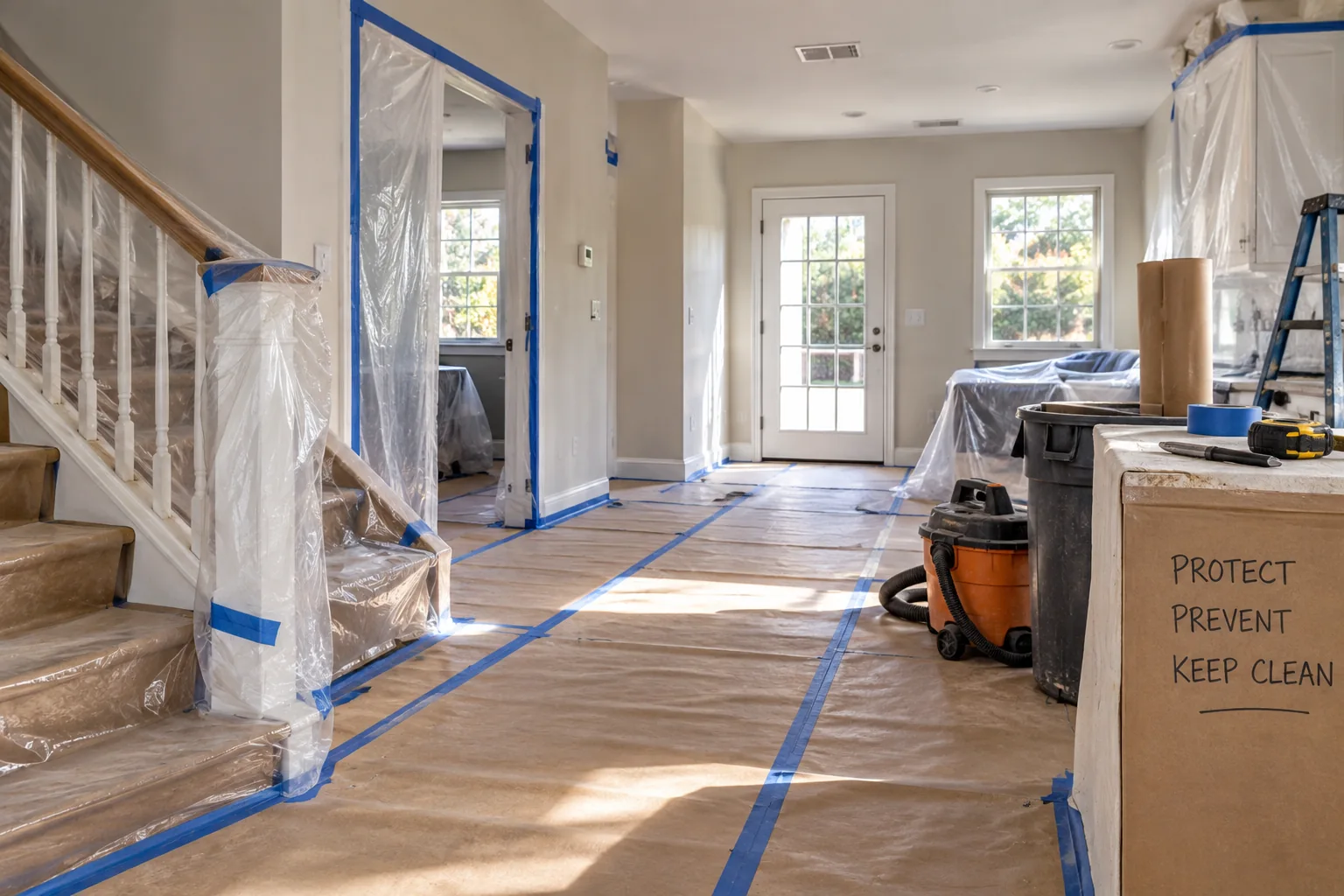
- How will the occupied areas be protected? Discuss access, dust control, temporary shutdowns, pets and daily cleanup when relevant.
- What can change the schedule? Ask how approvals, owner decisions, long-lead materials and inspections are tracked. Our Los Angeles construction timeline guide explains these dependencies.
- What does completion mean? Clarify inspections, punch-list work, documentation and final cleanup.
The goal is not to hear a perfect answer to every question. It is to see whether the contractor has a repeatable process and is willing to define responsibilities before the project starts.
7. What contractor warning signs should you watch for?
- The license number cannot be matched to the business or person offering the work.
- The contractor discourages permits where permits appear to be required.
- The proposal is substantially lower but the contractor cannot explain the scope difference.
- Important promises remain verbal after you request written clarification.
- The payment request does not follow current California home-improvement rules.
- The contractor pressures you to sign immediately or resists giving you time to review documents.
- There is no clear process for changes, schedule updates or resolving incomplete work.
A warning sign does not always prove wrongdoing. It does mean you should slow down, verify the information and avoid signing until the concern is resolved.
8. Can work begin while a permit is pending?
Submitting an application does not automatically authorize construction. The answer depends on the work and the agency with jurisdiction over the address. The contract should assign permit responsibility, and the team should identify which demolition or construction activities require an issued permit and inspection before they begin.
9. Evaluating Dominguez Construction
Use the same checklist with us that you would use with any contractor. Ask for a written explanation of the proposed work, exclusions, pricing assumptions, insurance, payment milestones, permit responsibilities, communication and change-order process. Compare those details with other proposals before deciding whom to hire.
If you are still defining the project, review our guides to planning an ADU budget, planning a remodeling budget, budgeting for a home addition and understanding a construction timeline before requesting proposals.
Bring us the project—not a polished pitch
Share the property address, the work you want completed and any plans you already have. We can discuss what must be defined before a proposal can be compared fairly.
Discuss your projectOfficial sources
Primary consumer guidance: California Contractors State License Board, Finding the Right Contractor, What Is a Contract?, Homeowner Checklists, Understanding Mechanics Liens, and Check a License. Accessed September 20, 2026.